Start with what you have.
Paper, crayons, a pencil, and counters. A grown-up helps with cutting. No shopping trip required.
A first business adventure for kids who love to ask “What if?”
Read a story together. Try eight playful missions. Help your child explore ideas, money, and problem-solving—with a short parent audio guide whenever you need a little help.
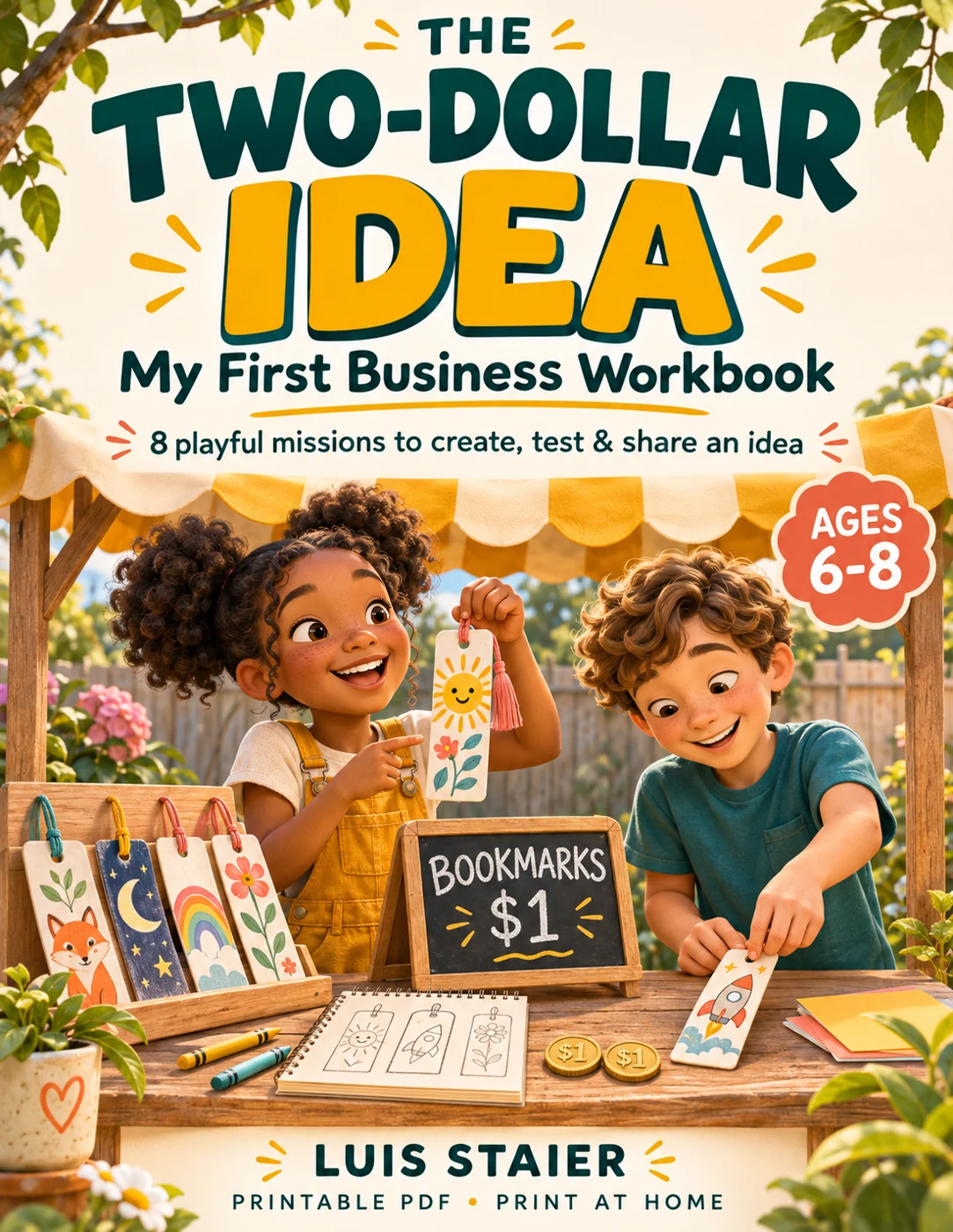
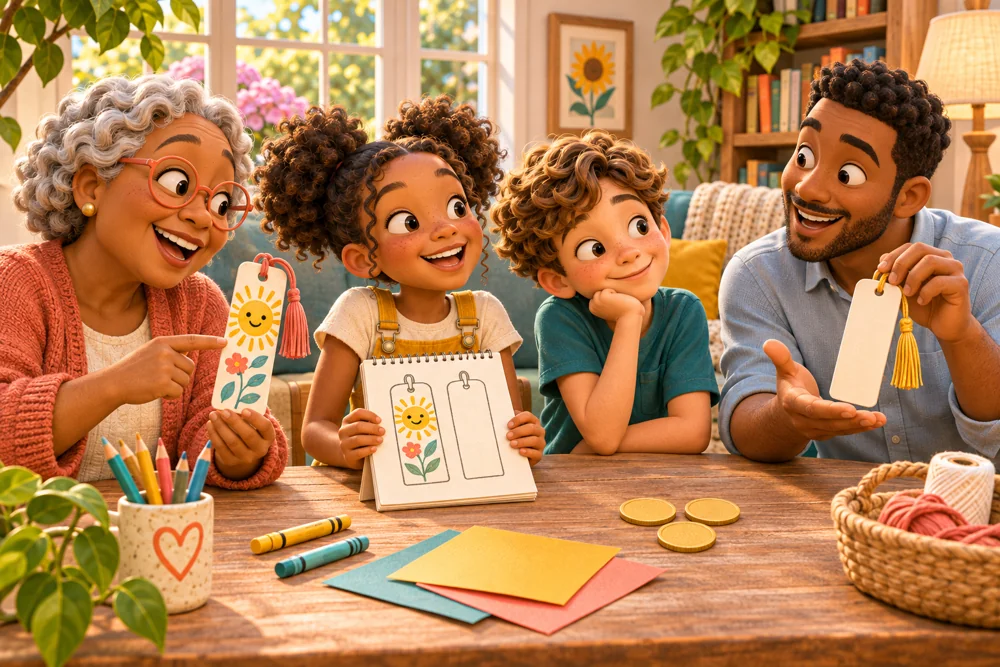
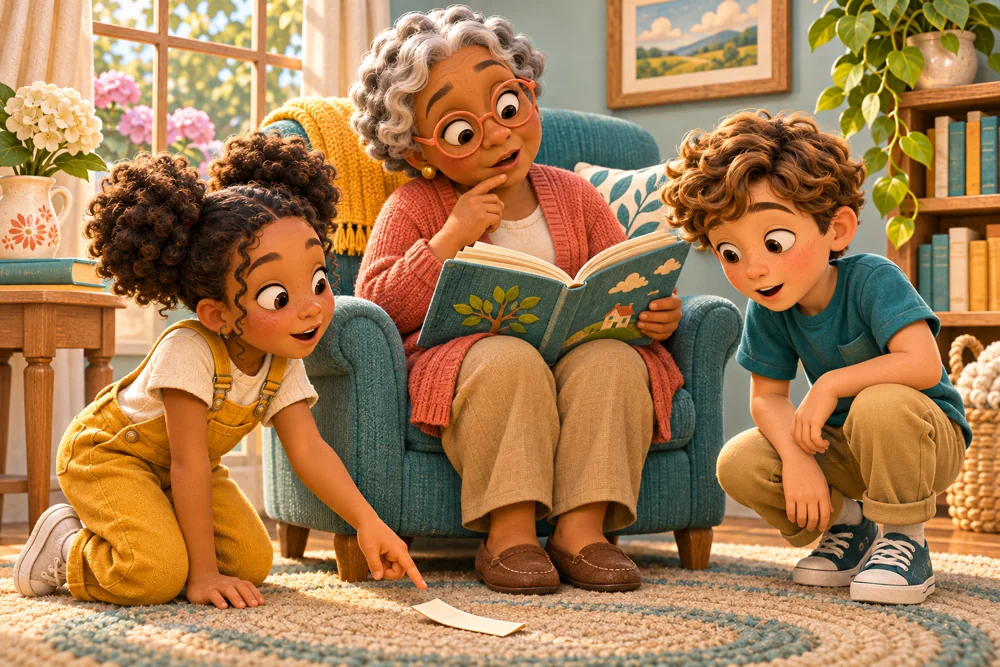
When Grandma loses her place in a book, Maya and Leo see a little problem worth solving. A paper scrap becomes a prototype. A question becomes a better idea.
Your child follows their story, then steps into the maker's shoes: listening, sketching, testing, and playing shop with a grown-up.
Follow the eight missionsLittle steps for curious minds.
Pick a mission to explore.
Look around one familiar place. Notice something that is hard to find, use, carry, or remember.
Big drawing spaces, simple prompts, and hands-on activities. Your child can talk, point, draw, or write, with a grown-up beside them.
You want to encourage their thinking. Sometimes, you just need to know how to explain the next activity.
Play the matching guide for the goal, the next steps, and possible questions your child might ask. Then pause and explore together.
Scan the activity’s QR Code to open its own page with audio, reminders and possible questions.
Clear instructions and suggested answers help you guide the conversation.
Return to paper, crayons, and your child's own ideas. Replaying is always an option.
Hear how to help your child notice a small, everyday difficulty before choosing a solution.
Download the sample MP3 ↓The guide offers words you can try, without taking over their answer. This is recorded activity guidance, not a live chat.
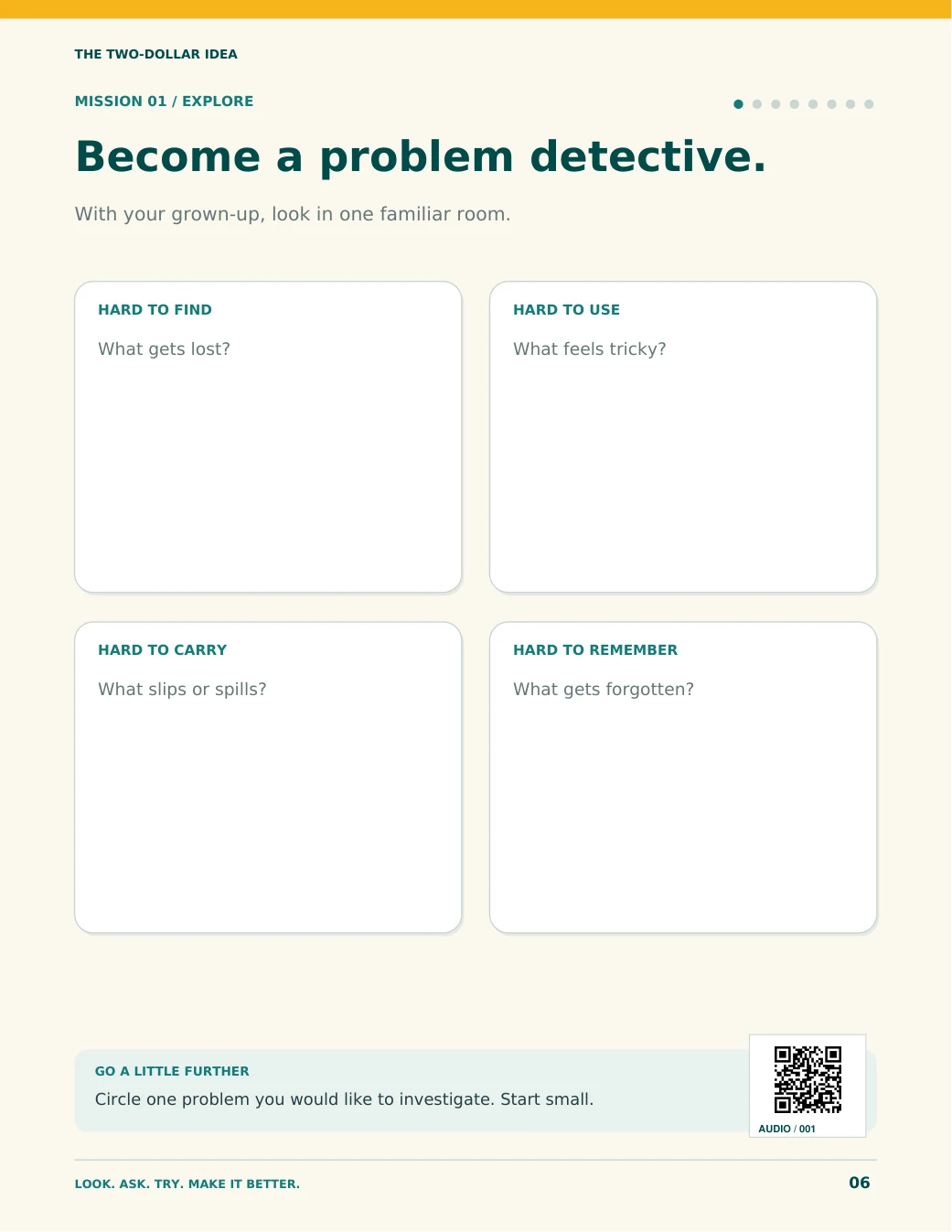
Let's look at “Become a Problem Detective,” on page six of The Two-Dollar Idea.
This activity helps your child notice a small, everyday difficulty before deciding what to make. You'll need the activity page and a pencil or crayons.
Together, choose one familiar room. Look at the four boxes: hard to find, hard to use, hard to carry, and hard to remember.
Ask your child, “What gets lost here? What feels tricky? What slips or spills? What gets forgotten?” Give them time to look. They can draw, point, or talk. You can write down their own words.
If your child asks, “What counts as a problem?” try: “Something that makes an everyday task a little difficult. Maybe a pencil keeps rolling off the table.” Then ask, “Have you noticed something like that?”
If they say, “I can't think of anything,” look together at a familiar routine. Ask, “When we get ready to read or draw, is there a tricky moment?”
If they ask, “Do I have to fill every box?” say, “We can explore them one at a time. It's okay if we haven't noticed something for every box yet.”
And if they ask, “Can I make something now?” say, “Let's save your idea. First, let's understand what happens.”
To finish, invite your child to circle one problem they'd like to investigate. Ask, “Can you show me when this happens?”
There isn't one correct drawing. What matters is noticing a real little difficulty and choosing one to explore.
No business experience needed. Read together, listen to a guide when helpful, and give their ideas room to grow.
Paper, crayons, a pencil, and counters. A grown-up helps with cutting. No shopping trip required.
Page-matched audio explains the activity and offers words for possible questions. Your child still chooses, tests, and explains their own idea.
Known adults and pretend money are enough. Learning comes from trying and reflecting.
Three standalone workbooks.
Same curious friends. New projects.
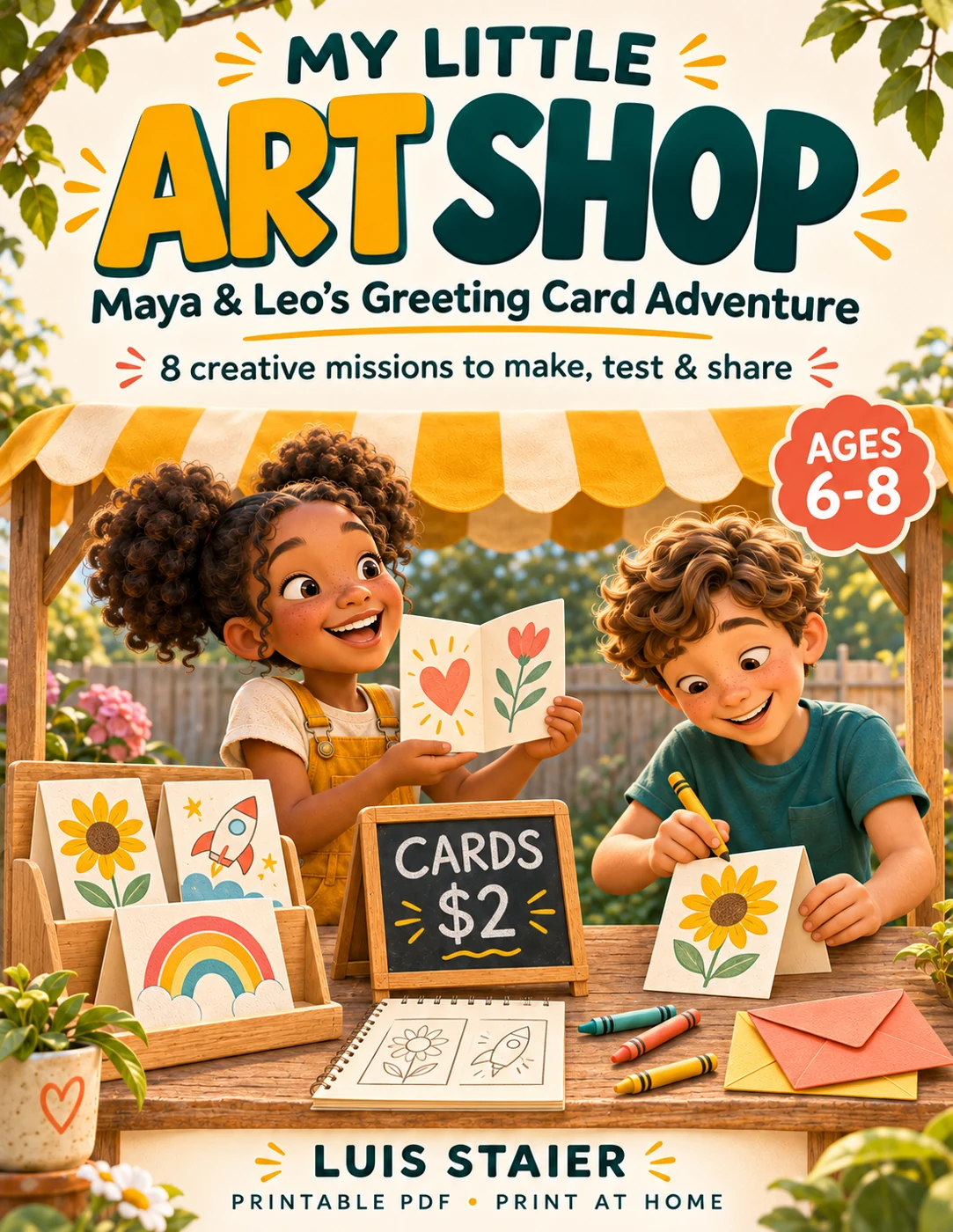 01 / CREATE
Listen to a customer's wishes, design a greeting card, and test the fit.
36 pages · 8 creative missions · 16 audio guides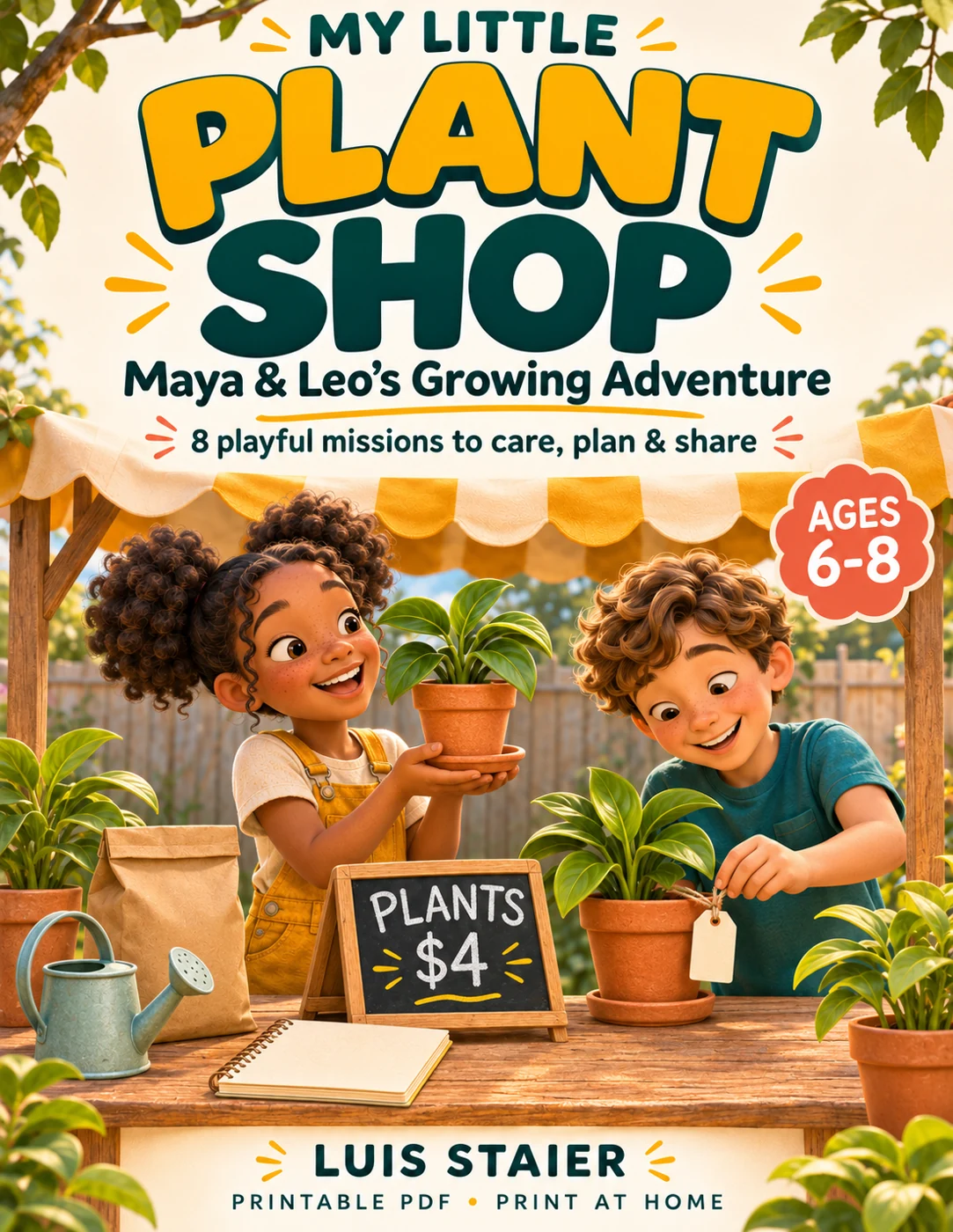 02 / CARE
Observe, plan care, and explain what a little plant needs after it leaves the shop.
36 pages · 8 thoughtful missions · 16 audio guides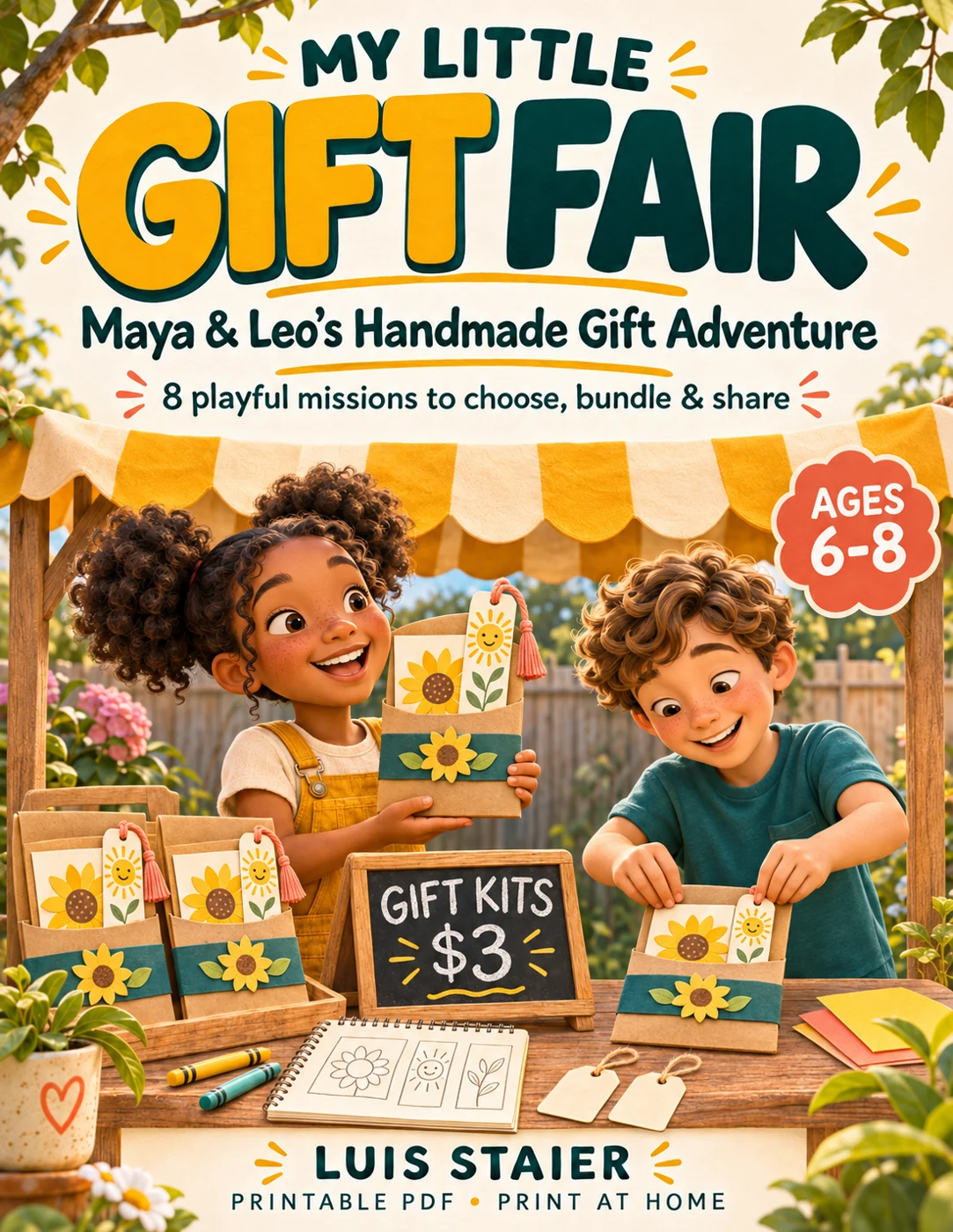 03 / SHARE
Choose a useful pair of paper gifts, test the packaging, and explain one clear offer.
36 pages · 8 playful missions · 16 audio guides Ready for a little “what if?”
Secure checkout and product access through Hotmart. Review the final total and purchase terms there.
Printable PDF + downloadable MP3 guides.
English. US Letter format. No physical book or supplies included.
It is a digital package: a PDF workbook to print at home and MP3 audio guides for the grown-up. You will not receive a physical book, craft supplies, or plants. The activities are designed for paper-based use.
No. The adventure is designed for a child and a familiar grown-up to explore together. Your child can talk, point, draw, or write, and you can read the story and record their words.
One recorded guide accompanies each activity page: 24 with The Two-Dollar Idea and 16 with each extra workbook. Each guide explains the activity, how a grown-up can help, and possible child questions with suggested responses. The stories, printing pages, and templates do not each have a separate recording. These are parent activity guides, not a narrated audiobook or a live AI assistant.
The written directions remain in the printable workbook. Audio is optional: download the MP3 files to a compatible device, then play them offline when you need guidance. Internet is needed for the initial download and this page's audio sample. The guides and workbooks are in English.
No. Familiar adults and pretend money are enough. A pretend shop lets your child practice explaining an idea, respecting choices, and counting. No real earnings are promised or required.
Use US Letter paper (8.5 × 11 inches), print single-sided at 100% / Actual Size, and check the preview. Gather paper scraps, crayons, a pencil, and counters. A grown-up handles scissors and other tools. Print maker-kit pages separately when you want to cut them out.
Yes. The household license allows the buyer to print copies for their own household. Please do not redistribute or resell the PDF files.
The title refers to Maya and Leo's pretend materials budget in the story. It is separate from the purchase price of the workbook. All exercise prices are fictional.
The first book follows a bookmark project. The optional collection adds three self-contained adventures: greeting cards, a plant shop, and a paper gift fair. Each has its own eight missions, 36 pages, and 16 parent audio guides. The plant adventure can also be explored using paper props.